

No results found for your search.
Select Country
How to Become an SEO Expert

Looking to become an SEO expert but have no clue where to begin? There's an obvious financial incentive to get good at SEO, with demand for SEO practitioners stronger than ever and average hourly prices ranging from $75 to $150.
However, because there are no universities that provide SEO degrees, you'll have to forge your own path in the sector. This article will teach you how to break into the field and get started on your path to being an SEO expert in just eight simple steps.

7 steps to become an SEO expert
To get from SEO rookie to SEO pro, follow this simple approach.
Learn how search engines work
Google's index, which is mostly produced through crawling the web, comprises trillions of online pages. When you type a query into Google, it returns all pages that match your search.
Because there are typically millions of relevant results, Google's algorithm uses hundreds of parameters to rank them. Nobody knows what all of these criteria are or how they are weighted, but we do know what some of them are.
NOTE: Only the so-called organic results are influenced by SEO. It has no bearing on paid advertisements. ,In this article, you'll learn more about those elements.
FURTHER READING
- SEO Guide: How to set Robots.txt & Meta Robots Tag
- An Introduction to Mobile SEO
- The Periodic Table of SEO Success Factors 2021
Understand 3 key ranking factors
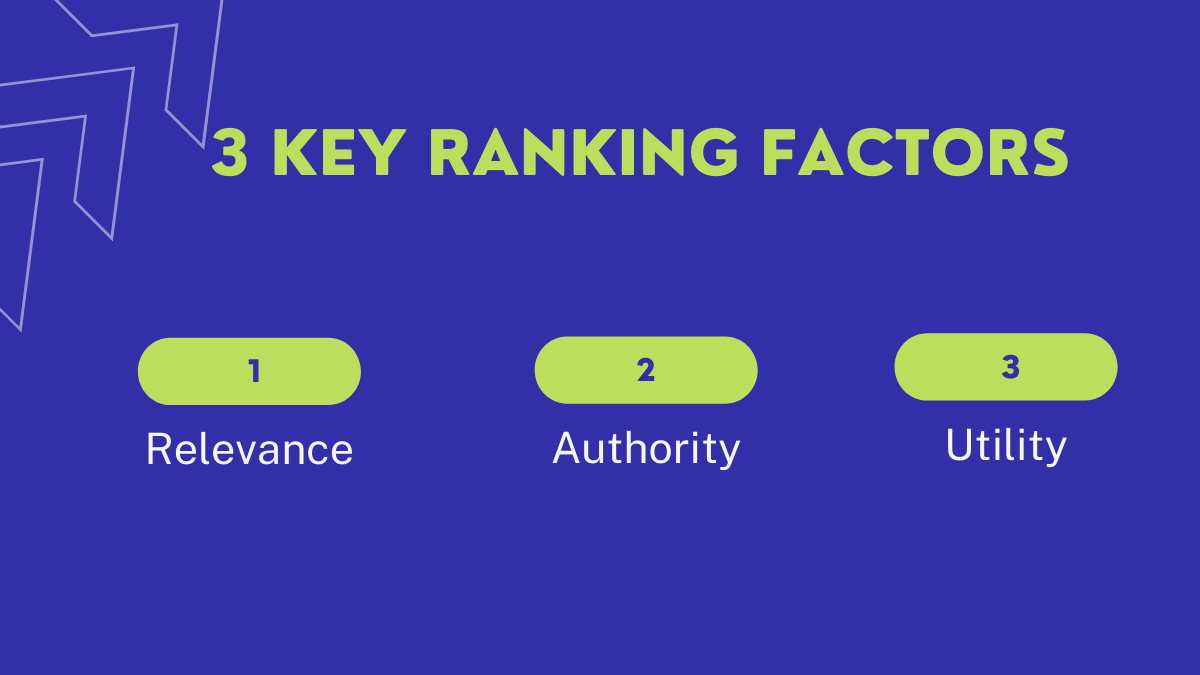
Many people become engrossed in optimising for ranking elements that aren't really significant. So, before you get too worked up about pagespeed or title tags, make sure you've covered the three major points.
ALSO READ: The Periodic Table of SEO Success Factors 2021
Relevance
This metric indicates how closely your page matches the query. Google will not return pages about vehicles if someone writes "how to manufacture lavender oil" into the search box because that is irrelevant.
But there's more to it than that. Your page should also reflect the types of content that visitors desire to see. A person searching for “how to manufacture lavender oil,” for example, is looking for a tutorial.
That's why the top page's results are all blog entries, not product pages. Optimizing for search intent is catering to the "why" behind a query.
Authority
Backlinks are largely responsible for this. Links are viewed by Google as votes of confidence. You're more likely to rank higher if you have more high-quality backlinks.
The two most important characteristics of the finest backlinks are authority and relevancy.
- Authority refers to the importance of linking a website and a web page. We use two metrics at Ahrefs to assess this: Domain Rating and URL Rating. Links from high-UR pages are the most powerful.
- Relevance pertains to the subject of the connected website and web page If a post about manufacturing lavender oil has two backlinks, one from a tech blog and the other from a health website, the one from the health website is likely to be more relevant. Relevance at the page level, on the other hand, is important.
If the linking page on the tech website is about a relevant issue, such as the best smart diffusers, and the one on the health website is about an irrelevant topic, such as bodybuilding, the link from the tech website might be more relevant.
ALSO READ: 8 Tips for Creating SEO Friendly Website
Utility
Google's goal is to put the best result first. That is to say, matching search intent alone isn't enough. Your content must be the most deserving of being at the top.
However, the quality and usability of a search query are determined by the search query itself. So the best course of action is to take a look at the current top-ranking pages and analyse what they have going for them, as well as where they are lacking.
This calculator, for example, performs great on a desktop but is nearly worthless on a mobile device:
Master the four main buckets of SEO
Consider SEO to be a multi-piece puzzle. Understanding how they work together is critical knowledge for everyone working in the sector.
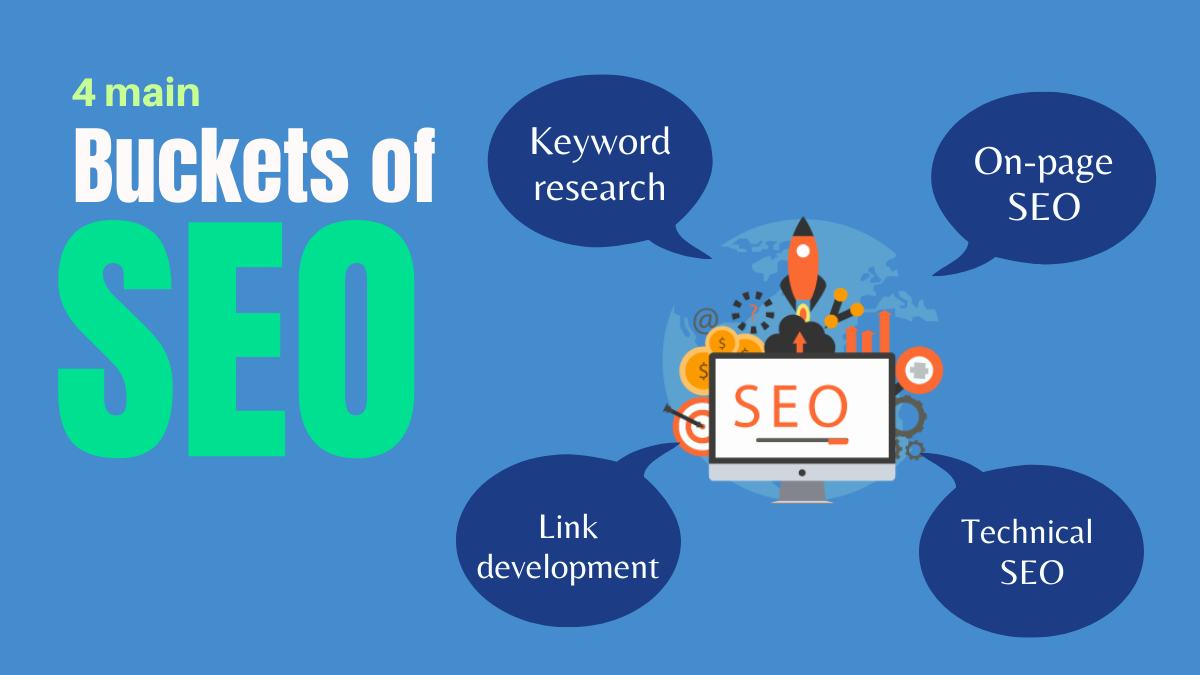
The four components are as follows:
- Keyword research
- On-page SEO
- link development
- Technical SEO
Let's have a look at what each of these tasks requires.
Keyword research
Finding relevant terms and phrases that people are typing into search engines like Google is called keyword research.
Generally speaking, you should aim for keywords that:
- Have “traffic potential” (i.e., they are likely to deliver you organic traffic if you rank for them);
- Have "business value" (that is, they are likely to attract new customers);
- Aren’t too competitive
ALSO READ: What is Technical SEO – 15 Major Technical SEO Checklist
Enter a few ideas into Ahrefs' Keywords Explorer and check at one of the keyword ideas reports to locate keywords that suit the bill.
You'll notice a few crucial metrics for each keyword:
Search volume: The monthly average number of persons who search for the keyword;
Keyword Difficulty (KD): On a scale of 0–100, the expected difficulty of ranking on Google's first page;
Clicks: the monthly amount of clicks on search results for that keyword
High traffic potential (i.e., high search volume and clicks), high business value, and low ranking difficulty are the ideal keywords.
On-page SEO
On-page SEO is the process of optimising web pages in order to increase search engine results and attract more organic visitors.
Here are several examples:
- Using keyword modifiers in your title tags;
- optimising for search intent
- Creating intriguing meta descriptions and titles;
- Using picture alt tags that are descriptive;
- Internally linking to pages that you wish to rank is a good way to start.
Link building:
The practice of obtaining fresh backlinks from third-party websites is known as link building. They can not only assist you enhance your rankings and increase organic traffic, but they can also send you referral traffic.
Technical SEO
Technical SEO is optimising your website so that search engines can easily crawl and index your content while providing a great user experience to your visitors.
Here are several examples:
- Increasing the page's speed;
- Broken links (internal and external) are being removed.
- To avoid duplicate content, use canonical tags.
- Adding hreflang tags to content that is multilingual;
- Adding hreflang tags to multilingual content; improving crawl efficiency using robots.txt;
- Thin content is not indexed.
Start a website
No matter how many golf books you read, you'll never win a tournament unless you pick up a set of clubs and practice. The same may be said for SEO. It's important to understand the theory, but there's no alternative for getting your hands dirty and ranking a website.
To begin your own project, simply follow these steps:
- Choose a topic that interests you;
- Purchase a domain and web hosting;
- Create a basic website.
- Begin producing content.
Then it's just a matter of putting your SEO skills to work by optimising your content, generating links, and ensuring that your site is technically good from an SEO standpoint.
Nothing will teach you more about SEO than putting your skills to the test. That said, it's clear that this takes time, and nothing takes longer than writing content. So, if you have the budget, there's no reason not to outsource content. Just be sure to offer your writer specific directions so that the work they generate is optimized for search engine rankings.
Create systems and delegate
You'll find that there aren't enough hours in the day to handle everything yourself as you learn more about SEO. Even if there were, though, doing so would be inefficient.
There are people who are better suited to do most SEO duties than you, if you're a "tshaped SEO specialist." Delegating those chores to the correct individuals allows you to focus on what you do best and love the most.
For example, if your area of expertise is keyword research and generating high-ranking content, you should devote your time to those activities. You can hire someone to help you with things such as link building and technical SEO.
ALSO READ: What is On-Page SEO and Some Top On-Page SEO Techniques
Your clients will receive superior service in addition to saving time because they will have highly specialised employees working on every element of their SEO.
More people, on the other hand, implies more moving components, which might cause things to fall through the gaps. The easiest approach to keep everyone on the same page is to create mechanisms. This entails generating SEO checklists (also known as SOPs) that you may utilise on each project to stay on track.
To get you started, here's a technique for producing a steady stream of high-quality backlinks:
Never stop learning
SEO is a fast-paced industry. Google acknowledged making over 3,200 algorithm modifications in 2018.
Although many of these changes were minor for users, they demonstrate how quickly “best practises” in SEO may change. Trying to keep up with every minor change Google makes, on the other hand, is likely to be futile, so it's best to stick to the basics.
To put it another way, rather than following algorithm updates, focus on what the algorithm is trying to achieve: providing people with the greatest and most relevant content. You won't have to worry as much about updates or penalties this way.
ALSO READ: What Are Breadcrumbs & How To Use Them For Effective SEO
Is this to say you shouldn't network and follow experts to broaden your horizons and keep on top of important new strategies? Obviously not.
So here are some ideas for how to go about it:
Attend SEO events in your region; join Slack communities; join Facebook groups; read SEO blogs; watch videos; listen to podcasts; connect with SEO professionals on LinkedIn; follow SEO gurus on Twitter; join Slack communities; join Facebook groups; read SEO blogs; watch videos; listen to podcasts
Choose the ones that appeal to you the most, but don't overdo it. Spend 80% of your time doing and 20% of your time studying, according to the Pareto principle.
Be patient
K Anders Ericsson famously stated that mastering a new talent takes 10,000 hours of practice. Is it possible to do it with less? Possibly. But here's the thing: becoming an SEO expert isn't something you can do in a day.
So don't be discouraged if your content doesn't make it to the first page in the first few weeks.
According to our study, this is unlikely to happen. Your pages will gradually start to rank if you develop strong content, optimize your pages, implement keyword research best practices, and build enough high-quality links.
So keep plugging away, be patient, and don't give up.
Do you have any questions? Leave a remark or send me a tweet.