

No results found for your search.
Select Country
Black Hat SEO: Techniques & Reasons to Avoid

SEO abbreviates to Search Engine Optimization. Companies & Marketers employ a wide range of tactics in search engine optimization. There is a safe method to approach SEO as well as a risky way. SEO is a legit technique to rank higher in search engines organically. However, some marketers have taken it in a wrong way to cheat search engine algorithms using different tricks later coined as Black Hat SEO. There are two types of SEO techniques: white hat and black hat. White hat SEO is an ethical strategy that provides users a relevant and high-quality content whereas black hat is opposite.
Black hat SEO is a term that refers to unethical methods of obtaining higher page rankings. Black Hat SEO prioritizes search engines over the needs of its target audience. As a result, black Hat SEO services have a bad name.
The goal of both White hat and Black hat SEO is to increase the visibility of a website in search engines. They differ, however, in how they go about achieving it.
Using Black hat SEO techniques comes with a lot of dangers. Your site may be penalised by Google, and your site may be banned. Google's decision to blacklist your site will be based on recent algorithm upgrades.
Let's take a look at what black hat SEO is and why it's become so popular in the SEO market before we get into the various black hat SEO techniques.
What is Black Hat SEO?
Black Hat SEO is a technique to manipulate the search engine results for a search query. Basically, marketers use different tricks and phishing practices to rank websites on the top in search engine rankings instead of creating high-quality web pages and getting excellent results.
In other words; Black Hat SEO is a collection of unethical practices used to boost one website's ranking in Google search results. These methods are known as black hat since they go beyond Google’s search engine standards. Keyword stuffing, cloaking, paid links, doorway pages, hidden content, and duplicate content are some of the most often employed SEO tactics. Let’s take a closer look at each one.
These Black Hat SEO or Black Hat Internet Marketing techniques helps to get the fastest results but do not work in a long run. A few years back search engines were not that smart to identify web spam, however, this is not the case anymore. These kinds of SEO techniques often lands you get a penalty from search engines like Google, Bing & DuckDuckGo.
What are the Black Hat SEO Techniques?
A lot of Black Hat Techniques to rank websites are in practice but the most popular are keyword stuffing, cloaking & PBNs. Most search engines have their own webmaster guidelines to optimize websites and web pages and do not suggest tricking search engines algorithms to get a high ranking in SERPs. As we said earlier, using these black hat search engine optimization techniques may lead to penalties for your website which means losing current rankings too and loss of organic traffic.
We've compiled a list of a few black hat SEO techniques to avoid.
1. Keyword Stuffing
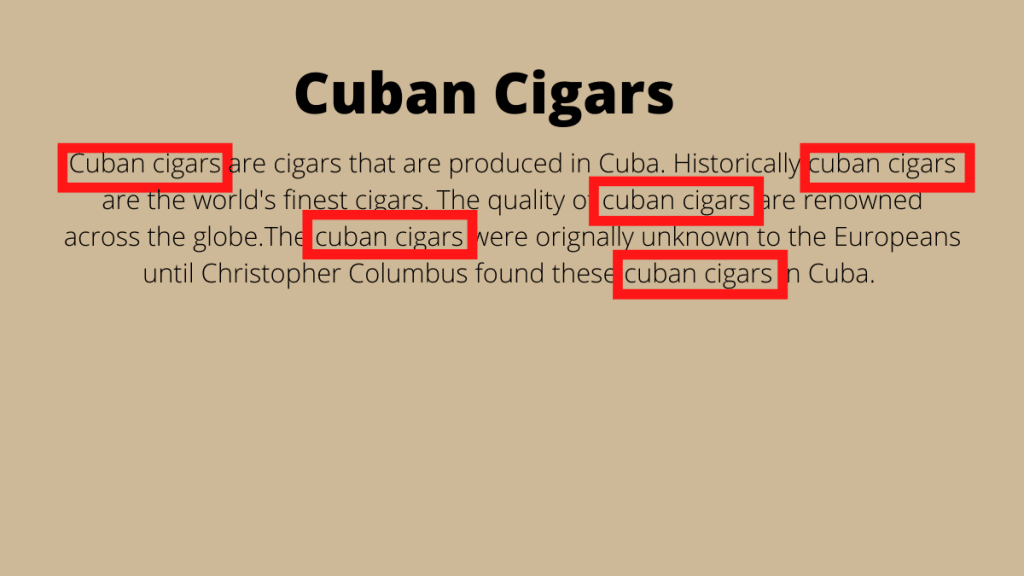
The Keyword Stuffing is one of the oldest Black Hat SEO Techniques in utilization since the inception of Internet Marketing. This can be done in two ways:
- Stuffing Irrelevant Keywords: A webmaster utilizes the irrelevant keywords on a webpage at a scale to get more traffic on a website. However, these website visitors are irrelevant to the webpage because they were searching for something else but you've onboarded them by stuffing misleading keywords on the page.
- Stuffing Relevant Keywords: The practice of stuffing many keywords into a single sentence is also comes under keyword stuffing. Stuffing a page at scale with synonyms of main keyword in order to rank higher in search results is referred to as this approach. Also, many marketers repeats and rephrase the same words and sentences to manipulate the Google search bot and gain better rankings.
More to know about keyword stuffing:
- Keyword stuffing is the practise of stuffing keywords into a webpage to make a search engine believe it is related to the search. This strategy was more prevalent in the past, however the situation has altered as a result of Google's algorithm adjustments.
- It's fine to use relevant keywords and information about the subject. Keyword stuffing occurs when the keywords are included after every two sentences.
- A keyword density of 2% to 4% is regarded reasonable, but anything higher than that is a problem.
- Stuffing keywords will irritate both the search engine and your visitors.
- Only a certain number of keywords should be included in the content of your page.
- The penalties for using black hat SEO tactics are significant.
2. Duplicate Content

As its name suggests; a website owner simply copies the content from other websites and published it as it is on his own site. This type of content is called duplicate or plagiarized content. If your site is practicing these black hat SEO techniques then you are on the way to getting penalties from search engines like Google.
Isn't it illegal to steal other people's content and that's why Google and other search engines strongly opposes this technique. Major search engines loves the original content.
- Duplicate material, or content that has been duplicated from another website, is considered a black hat SEO practise. Plagiarism is the term for duplicating content.
- Unique material is always attracted by search engines.
- It will not index content that is repeated multiple times.
- Focus on writing unique and innovative content to be successful in your SEO marketing effort.
- Duplicate content can also emerge on your blog. There are numerous anti-plagiarism programmes available online that can assist you in detecting duplicate content.
- Websites with duplicate material will be penalized by search engines.
3. Cloaking
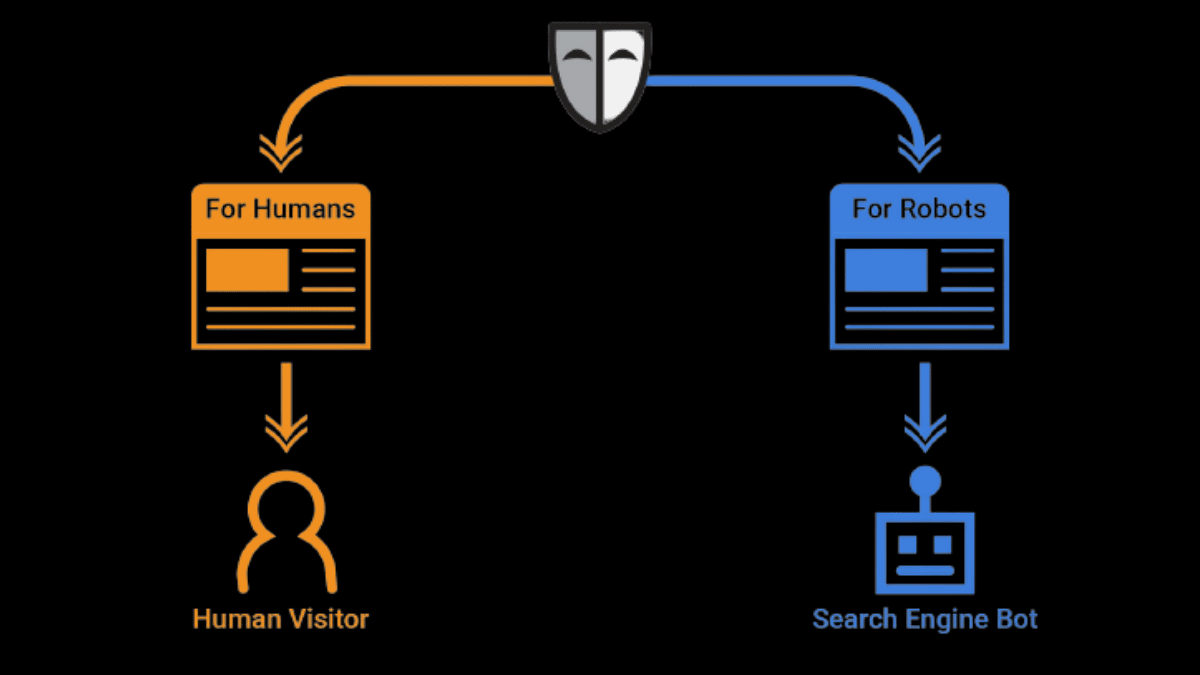
Cloaking is an unethical way to use two different contents; one is written for the search engines and the other for the users. The cloaking while search engine optimization of web pages violates the webmaster guidelines and invites penalties from algorithms like Google Penguin.
This approach is considered one of the hacker-man techniques as it includes showing one version of your website to the Google bot and another to the user.
Features of Cloaking:
- This is by far the most popular Black Hat SEO service. Cloaking is when SEOs trick search engines and people by displaying different content to search engines and redirecting users to a site with different information.
- Cloaking is a technique for highlighting a website that has a design that is more appealing and favorable to users than to search engines.
- Using alternate keywords, titles, and descriptions that aren't relevant to your site is one type of cloaking.
- Your site will be blocked if the search engine discovers that it is cloaked.
This is done in two ways:
- Search engines see an HTML text page, while consumers see a page with CSS, JS, and image-heavy content.
- Embedding text or keywords inside a page and only displaying it if the user-agent crawling the page is a search engine rather than a human visitor.
4. Paid Links
Paid links are the most trending black hat SEO technique that is still in use and preferred by pro marketers as it is not easily noticeable. You can understand this technique as one website owner pays another website to give a link in exchange for money. Even, many agencies sell such paid links, which are frequently spotty and of poor quality. You should always avoid to obtain such links.
- The importance of links is thought to be the most important component in determining a website's rating.
- In exchange for money, many companies will offer you thousands of connections.
- The Penguin update by Google is designed to combat link-buying practises by identifying spam websites or firms that sell links. The sale of links by such companies or websites is prohibited.
5. Doorway Pages
Door pages, bridge pages, and jump pages are produced expressly for specific queries and are designed to score well for specific keywords. These pages have little value for the user and are solely designed to fool the search engine and redirect a visitor from a searched query to a different collection of websites, i.e. a hazy destination.
- Pages that are badly written and of no use are referred to as "doorway pages." It was made solely to entice visitors.
- By redirecting traffic to the site, these pages assist with navigation.
- Doorway pages appear to be a page in the search engine's index, but they actually redirect to a different website.
- Only a few search engines are allowed to see the doorway pages.
6. Link Farms, Link Wheels, Link network
Link Farms, Link Wheels, Link networks often called Private Blog Networks. These kind of websites are sites or a collection of websites are dedicatedly built for link building. These Link Farm websites have almost no content and simply points to other site that wants to rank higher in search engine results pages.
As we all know, web crawlers rate a site based on the number of websites that link to it, as well as other factors. The link building through link farms is exploited by black hat SEOs to increases the number of backlinks to a site. Creating such backlinks to increase the website authority is useless and total wastage of time. In our opinion, you should invest your time and money to create link-worthy content that people love to link back.
Link Farms are a collection of websites whose main objective is to increase the popularity of another website by using hyperlinks. These links will not drive visitors to your site, but they may draw the attention of search engines. Links originating from irrelevant sources will have a detrimental impact on SEO. Links collected from third sources are frowned upon by Google and other search engines. If your website contains a large number of these links, it will be tracked down and penalised.
You can use link farms in a method that has no negative impact on your site's rankings. As a result, be cautious with your hyperlinks.
7. Hidden Text and Links
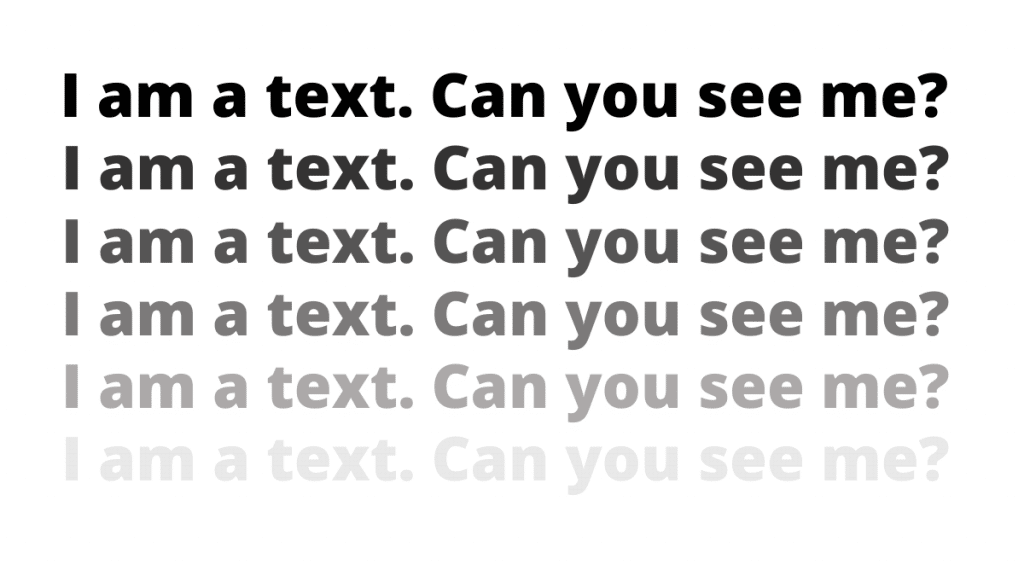
Many webmasters use hidden texts and links on a web page with a similar background color or size "0". This practice makes the text invisible to users while surfing the webpage but visible to the search engine web crawlers.
- The term "hidden text" refers to black hat SEO practises in which the content entered into the site is rendered invisible or illegible. It alludes to white lettering on a white background. Humans are unable to read words printed on a background of the same hue. However, search engines can do so.
- These hidden links or texts are used on a website to boost the keyword density on a given page.
- Make sure your source code and logs are clean of hidden text before launching your site.
- If the search engine discovers the concealed text on your site, it will punish it.
Google calls it deceptive in its webmaster guidelines (read here). Google particularly highlighted the following:
- Using white text on a white background
- Locating text behind an image
- Using CSS to position text off-screen
- Setting the font size to 0
- Hiding a link by only linking one small character—for example, a hyphen in the middle of a paragraph
8. Spamming in Blog Comments
The intellectuals and scholars in the comments area, oh, the intellectuals and scholars in the comments section. This method entails leaving comments on blog sites and including a link to their website. This is done only for the purpose of obtaining a backlink from that particular website. Such links from blogs are currently ignored by Google; the website owners have configured the links to no-follow by default.
- Commenting on blogs and other relevant websites is a common practise. Links to one's website are included in such comments. Comment spamming is the term for this.
- Google introduced the nofollow tag in 2005 to avoid indexing such links on the search page.
- Other search engines, such as Yahoo and Bing, have a nofollow property as well, but they do not use it in their ranking algorithms.
- Although comment spamming has been minimised, it has not yet been totally eliminated.
- Spamming comments generates additional traffic to your website.
9. Incorrect Re-directs
Redirects are a wonderful way to send a user to a better-functioning page if the one they're on isn't working. In such circumstances, website owners utilise 301 redirects. The black hat "experts," on the other hand, exploit these redirections to send the user to a whole different page. By directing consumers to a page with a faulty URL that they did not want to see, they trick both the Google bot and the users.
10. Overly Optimized Pages
Do you know the expression "too much of a good thing is bad for you"? The same is true for your web pages. Sometimes SEO pros are so focused on optimising their pages that they do a little too much. This contains a variety of On-page features like as over-optimized anchor text, a large number of internal links, keyword-stuffed titles and descriptions, as well as the content.
All of this could backfire, and you could be penalised by Google if your efforts are deemed to be black hat SEO tactics.
11. Bait and Switch
When employing Bait and Switch, the first step is to write a page for Google that includes a set of keywords, then change it to different products and projects as your ranking rises. As a result, a user sees something wholly unrelated to the topic they clicked on. This technique, also known as Page Swapping, is intended to deceive people and search engines. Black Hat SEO is defined as unethical SEO tactics.
12. Clickbait
The term "clickbait" refers to a title that is both spectacular and visible in order to entice readers to click on the link. This is a copywriting technique that involves exaggerating a topic in order to get a visitor to click on a link that leads to irrelevant content. These types of methods are utilised to generate revenue based on the amount of clicks. It's a popular algorithm in tabloids, and it accounts for a significant portion of Black Hat SEO.
13. Guest Post Spam
This is a Black Hat technique for getting backlinks that involves sending letters to bloggers asking them to post an irrelevant article with a do-follow link. Guest blogging activities that include links to such articles can have an impact on a site's ranking. These linked blogs are still put on irrelevant websites for the sole purpose of link-building, notwithstanding their poor quality.
14. Negative SEO
This refers to the practise of adopting black hat SEO techniques to degrade a competitor's search engine rankings. The steps are as follows:
- Hacking the website
- Building numerous spammy links to the website
- Copying the content and spreading it all over the internet
- Pointing links to the website using various keywords
- Removing the best backlinks from the website
15. Automated Queries to Google
This is a form of black hat SEO in which software is used to generate automated searches for specific keywords. To rank higher in the SERPs a webmaster use an automated software that repeats the search queries in search engines to increase the number of keyword searches. SEOs do this to reach the top position on the Search Engine Result Pages in an unnatural way.
Submitting Automated Queries to Google without authorization goes against its Terms of Services and doing this, you may get a penalty from Google.
16. Article Spinning

Article Spinning or rephrasing the content, copying from the other website, and publishing on your own website is another popular black hat search engine optimization trick. This technique is commonly used for Autoblogging where a website owner scraps the content from another website and rewrites manually or using Artificial Intelligence. It also falls under the Black Hat SEO techniques and is prohibited by search engines.
- Article spinning is a strategy in which site owners, rather of generating fresh content for their updates, make minor adjustments to current content and alter a few points to give the text a tiny twist.
- Search engines are continually on the lookout for new information on a website.
- This approach is frequently utilised as an off-page black hat SEO tactic.
- This black hat SEO service degrades the original content's quality. This strategy also cuts down on the amount of time you spend using the contents.
- Employing content writers that regularly update your site with new information is the greatest method to avoid article spinning.
17. Structure Data Markup
Structure Data Markup is a process to format web page elements to show data to search engines and users on search result pages. This also helps search engines to clearly see the data on a particular webpage. However, some webmaster exploits this SEO technique to send wrong data signals to the search engines and show wrong information to the website visitors. Thus, exploiting this process is also considered a prohibited practice while doing SEO.
18. Link Exchanges

- Your site's ranking may suffer as a result of link swaps.
- Programs that allow you to exchange links with others are known as link exchange programmes.
- Although link exchange systems can help you obtain a lot of links, they won't help you improve your page rank.
- Your SEO efforts will be squandered if you engage in excessive link exchange.
19. Translated Sites or Machine Translation
For SEO purposes, some SEO specialists utilise technologies that automatically transform the contents of a page into different languages. However, such translated sites are frequently incomprehensible.
20. Parasite Hosting
- Site hosting is when a website is hosted on another person's server solely for SEO purposes. If a visitor clicks on such a website from the search result page, they will be taken to an entirely other website.
- In the year 2007, this technique was put into practise.
- Many SEO specialists employ black hat SEO methods to redirect traffic to their websites.
- Because the hacked website exhibits no evidence, this strategy is difficult to detect without sufficient security measures.
21. Google Bombing
- Google bombing is a strategy for lowering a competitor's search engine rating. It really tampers with competitors' search results.
- Google bombing entails producing negative pages about competitors and redefining a certain term or phrase associated with a competitor's campaign.
- This SEO strategy is more effective and leaves a longer-lasting impression on the audience.
- If a search engine discovers a Google Bombing tactic, its effectiveness is immediately reduced.
22. Low-quality content
- A website's rating can be harmed if the information on the site is of poor quality.
- Writing new, error-free, and original content is always preferred.
- Before you update the information on your website, make sure it's free of plagiarism.
- Update your website's material on a regular basis to keep visitors interested.
23. Meta Description Stuffing
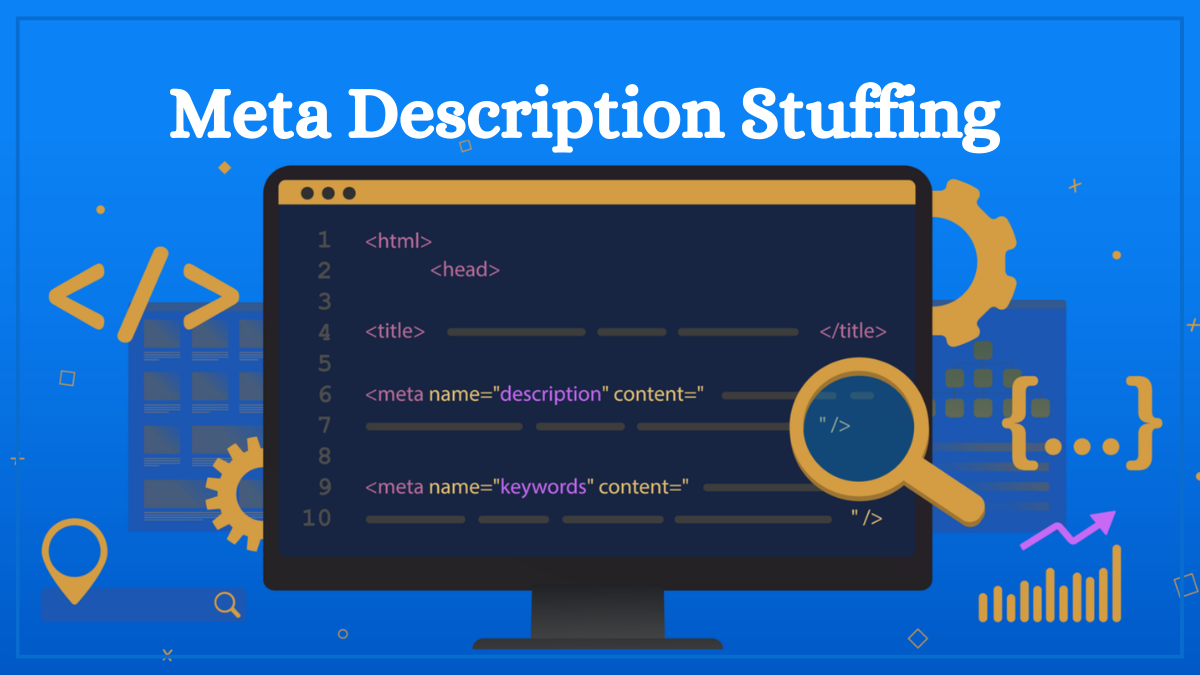
- Another black hat SEO strategy is continually stuffing keywords into Meta tags and Meta descriptions in order to entice search engine crawlers to index and rank their web sites high in the search results.
- The meta tag descriptions describe the content of a page. As a result, search engine crawlers focus on the page's specific content rather than the meta tags.
- Although meta tags or descriptions may deceive a web crawler into visiting the site, the search engine will not index the page if keywords are not properly used in the content.
- As a result, if this strategy is employed alone, it will simply draw unfavorable attention to the site. To improve their site's web ranks, it should be paired with strong and quality page contents.
24. Page Swapping
- Another black hat SEO service is to place a page on a site for a period of time and then replace it with a less optimized page once the page has achieved a decent ranking.
- Because search engines re-index pages more regularly these days, this strategy is no longer effective, and such pages quickly lose their value.
25. Pingback Spam
- A pingback is a method for one blog to notify another that it has published a new post. It alerts the search engines and ping servers about the contents multiple times in this manner to provide the impression that the content is new.
- Pingbacks are totally automated, allowing the software to communicate with other websites.
26. Cybersquatting
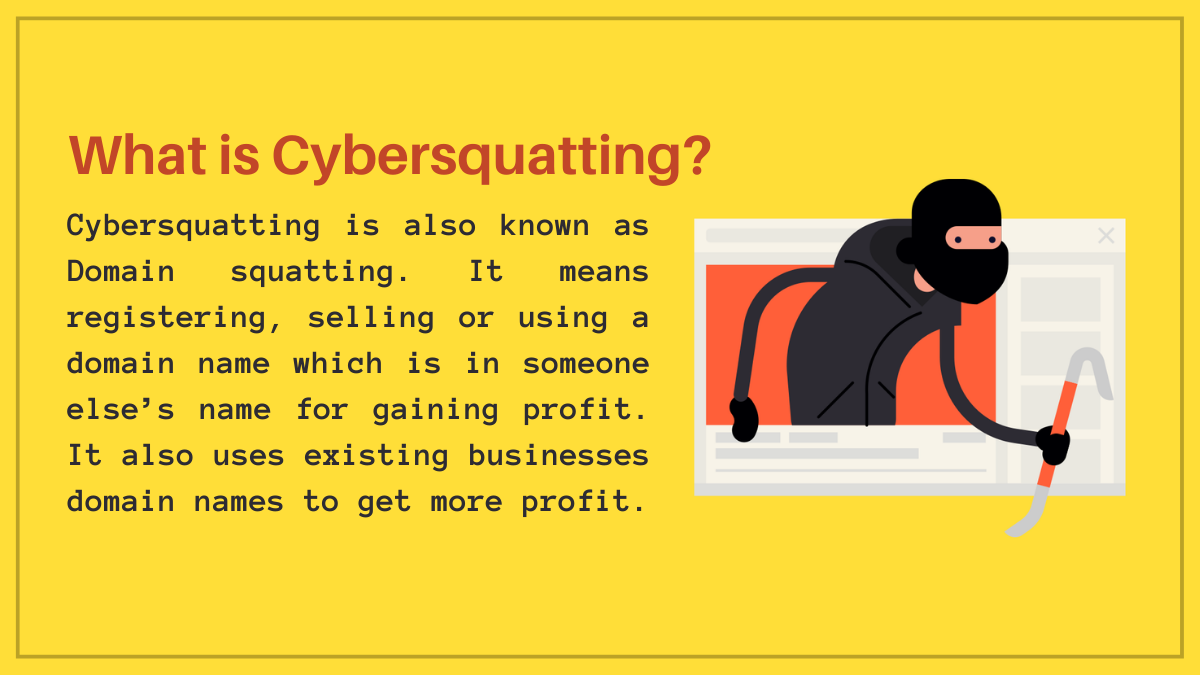
- Domain squatting is another term for cybersquatting. It entails registering, selling, or utilizing a domain name that belongs to someone else for the purpose of profit. It also makes money by repurposing existing corporate domain names.
- This technique is used in SEO to increase traffic to a personal website.
- Always use a brand-new domain name that doesn't already exist. Make sure the domain name is appropriate for the website or product.
27. Typosquatting
- URL Hijacking is another term for typosquatting. It is predicated on the likelihood that a certain amount of online visitors may misspell a website's or URL's name.
- Typosquatting is when a website owner buys a domain name that is a misspelled version of a competitor's or well-known website in order to deceive visitors.
- This aids in the growth of their website's traffic.
28. Social networking Spam
- Users of internet social networking sites such as Facebook, Twitter, Pinterest, Google +, and others are targeted by social networking spam.
- This spam uses social network search capabilities to send emails or messages with advertisements to a specific set of people or fan pages.
- This is used on social media to promote their website or goods.
29. Cookie Stuffing
This is a marketing strategy in which a cookie is placed on a user's computer without their knowledge. This occurs when a person accesses such a website. A cookie will be sent to you from a completely separate website.
30. Scrapper Sites
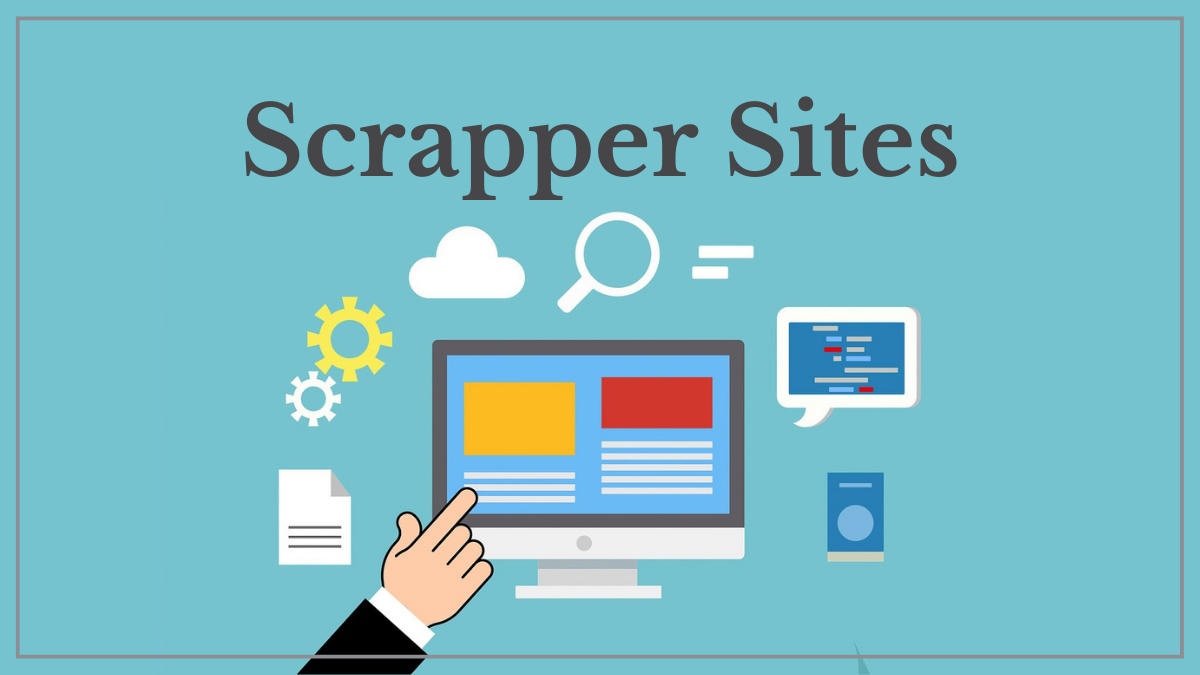
- A scrapper website is one that steals content from another website in order to create original content. It then merges all of the gathered data into a single structure.
- Advertisements are common on such sites, which are utilised for marketing purposes.
- It uses a blog network to increase search engine rankings.
31. Referrer Spam
- Referrer spam is intended at search engines, and it entails using a fictitious referrer URL to drive more website requests to the site where he wants his advertisement to appear. Such websites will link back to the spammer's website, and search engines will index these links.
- As a result, spam has a direct impact on website traffic. It improves the spammer's site's search engine rating.
- The above list includes the majority of black hat SEO tactics that should be avoided. If you use black hat SEO practises, your reputation will suffer, and your site will be banned.
You can use a variety of additional White Hat SEO strategies to increase the popularity of your website. Using white hat SEO techniques to increase your website's visibility in SERPs takes time. However, the effects will persist for a long time. Keep this in mind and begin implementing White Hat SEO strategies; the rest will take care of itself.
Why should you avoid Black Hat SEO?
Black hat SEO is illegal and it does violate search engine webmaster standards. Pages that show signs of using black hat SEO practises are often de-ranked immediately, with the possibility of “domain blacklisting” as one of the measures in domain penalties. If you receive a Google penalty, you will either fall further down the search results or be completely eliminated. As a result, the website will receive less traffic and fewer customers. While some companies provide Google penalty recovery services, it is advisable to avoid engaging in such actions in the first place.
The main reasons to avoid Black Hat SEO are:
- It is illegal & unethical
- It harms Brand reputation
- Doesn't provide what users are searching for
- Not good for long run
- Gives irelevant content
- Increasing bounce rate
- May get search engine penalty
How to avoid Black Hat SEO?
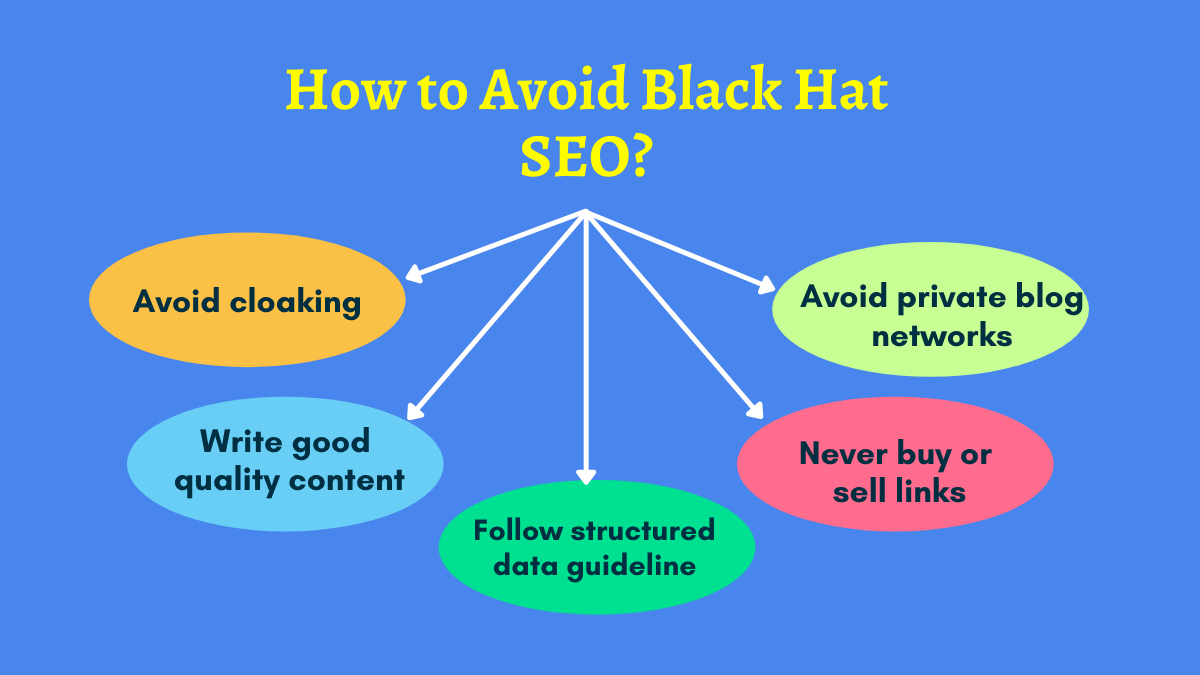
White Hat SEO is the best way to avoid the Black Hat Marketing tactics as it performs well in long run builds strong businesses. Black Hat SEO can work for the short term and can lead to quick success but now search engines are smart enough to detect web spam and punish them. You should always focus on creating an ethical business with fair marketing practices.
The best ways to avoid Black Hat SEO are:
- Avoid cloaking: Providing the search engine and users with conflicting information can result in your site being blocked.
- Write unique, useful and high-quality content: Nothing surpasses the power of useful and high-quality content that visitors find useful.
- Follow these data-structured guidelines: This can help you appear higher on search engine results pages and rank considerably higher without the usage of black hat SEO techniques.
- Never, ever, ever buy or sell link: Buying or selling links for the sake of increasing traffic may appear to be worthwhile in the short term, but it is a major risk that should be avoided.
- Private blog networks should be avoided at all costs. They can be the death knell for your website. Google will penalize your website or remove it from the search results.
How to report Black Hat SEO?
Have you found a website using unfair SEO practices and planning to report them?
Do you know, you can do it!
If you found a website that is using the black hat SEO techniques to manipulate the search rankings you can file a spam report with Google for the violations. Your reporting will help the Google algorithms to discover the webspam and check for the violations. If that website is found using unfair ways to get higher rankings then Google will take action against that website and may penalize that by downgrading their ranking.
There are two instances in which black hat SEO tactics should be reported:
- The first is when your website is targeted by a malicious hacker, a virus, or spam links as part of a negative SEO campaign.
- Another example is when interconnected black hat approaches uncover spam-infested Web results for a competitive phrase on which your website ranks.
To deal with these issues, you'll need to use Google Search Central to submit a webspam report. Falsely reporting competitor pages is likewise seen as a black hat practice.
If your website has been infected with a virus or malware, you can request a malware evaluation once the bad code has been removed.
If your website is the focus of negative SEO tactics, use Google Search Central's Disavow Links Tool after contacting the Webmasters who are referring such links to your site to get them removed.
Black Hat or White Hat SEO?
Black Hat SEO techniques can deliver quick results but such results don't last long and leaves negative impact on the quality of search results. Black Hat Search Engine Optimization is opposite to White Hat SEO techniques where White Hat process takes hard work & time, follows the search engine guidelines. On other hand black hat tactics gives fast results.
Almost every search engine updates its search algorithms to deal with such website that spam the search results. Sometimes, search engines like Google completely ban them from its search index. Using Black Hat SEOs will not take you anywhere, so it is better to invest some time and money on the fair SEO pracitices.
After all it is up to you!!!
Summary
We all want to rank higher in Google search results and have better sessions, which is understandable. Any strategy is okay unless it interferes with or violates the Google Search Engine Guidelines.
So now it's up to you to decide whether you want to be the villain who attempts to get things done faster but in a shady way or the hero who does everything right to get things done.
White Hat heroes or Black Hat villains? Which side are you on? Let us know in the comments section.