

No results found for your search.
Select Country
How frequent should blog posts be published?

If you've been blogging for a while, you've most likely heard that you should blog every day. Maybe you feel compelled to blog every day, but you're hesitant to start since you know you don't have that much time.
Maybe you're already blogging and doing your hardest to publish a new post every day, but you're not getting many comments or tweets. The good news is that you probably won't have to blog every day. In fact, you might discover that blogging only a handful of times per week is more effective.
But, before you dismiss the idea of publishing blog posts every day, consider the following reasons why it would be a good idea.
Why posting every day might work for you
Some bloggers thrive when they stick to a regimen, and you could be one of them. If you discover that publishing once or twice a week suddenly becomes once or twice a month, you might find that posting every day is actually easier. You'll be able to develop a solid writing habit this way.
If you're writing a news-focused blog in a fast-moving niche, another reason to update every day is to keep your readers informed. If you want to stay on top of what's going on, one weekly post isn't going to cut it.
There are also certain SEO advantages to quickly accumulating a large number of postings on your site: all else being equal, the more pages you have, the more chances a reader has to locate you via search engines. (Of course, in practice, it's not quite that simple—one high-ranking post will typically get you far more traffic than five mediocre ones.)
If you're going to post every day, here's what you should do:
- Maintain brevity and focus in your posts.
- Plan ahead of time so you don't end up producing subpar content in a hurry
- Experiment with different sorts of posts, such as video or image-heavy ones.
Why one, two or three posts per week is usually better
There has been a movement in the blogging world during the last few years. More and more well-known bloggers-on-blogging are abandoning daily posting, telling their viewers that they don't need to publish every day to be successful.
There weren't as many "pro"-style blogs around five years ago, and people were hungry for substance. With so many blogs to pick from these days, readers rapidly become burnt out.
As a reader, I prefer blogs that publish once a week or even once every two weeks—but always say something truly useful—to blogs that post every day just for the purpose of posting. You'll probably find that you feel the same way if you compare the blogs you read in-depth to the ones you skim.
As a blogger, blogging once or twice a week allows me to produce more in-depth, well-crafted entries, which are more likely to receive links and tweets. This way, I get more comments per post and have more time to interact with readers over the course of several days of comments.
If you're just going to post twice a week, here's what you should do:
- Examine which posts on your site are the most popular so that you can make each one a winner.
- Experiment with longer postings of 1,000 words or more.
- Concentrate on evergreen content to ensure that each piece remains relevant for years.
Finding your perfect blogging routine

We all have various abilities, personalities, and time and energy limits as bloggers. Don't try to follow someone else's blogging regimen because it won't necessarily work for you.
One article each week or one post per day can be your ideal blogging schedule. It could entail creating postings on the spur of the moment or according to a defined timetable. You might utilize a content calendar to help you plan ahead for all or some of your material, or you could schedule posts with different themes on different days of the week or month.
There is no such thing as a "one-size-fits-all" strategy to blogging; what matters is that you discover a routine that you can stick to for the long haul, rather than one that burns you out after a few weeks.
If you vary your posting frequency, don't worry about upsetting your readers. I've changed things around on numerous blogs, and no one has ever complained that they wanted five postings a week instead of three, or that my posts should be on Mondays and Thursdays instead of Tuesdays and Fridays.
When you're experimenting with your blogging schedule, keep these things in mind:
- Don't make drastic changes: for example, switching from five to three posts each week isn't a good idea.
- Consider polling your viewers to see if they prefer more or fewer posts.
- Experiment with scheduling posts or putting out a content calendar.
Blogging shouldn't be a chore: if publishing every day isn't working for you, it's unlikely that it will for your followers. Examine your blogging schedule today to see whether you want to make any adjustments.
How Many Posts Does My Blog Need to See SEO and Traffic Results?
So you've decided to start a blog. What a thrilling prospect! You're learning how to create articles and creating a one-of-a-kind platform to show off your work, illustrate your expertise, and expand your brand.
However, once you get started, you could have certain questions, such as:
- How many posts should a blog have in order to attract visitors?
- How many blog entries should you publish each week?
- How long will it take for your blog to become popular?
Here, we'll provide you some perspective so you can set realistic expectations for your blog's performance and work harder to achieve the success you want.
The Stats Behind Successful Blogs
In the past, blog postings may appear on the first page of search engine results for a given query or phrase within days. However, Google's algorithm has now been updated.
For several months, the Google Sandbox effect prevented numerous blogs from appearing in search results. How long does it take for a blog to get popular? Many bloggers report that it takes three to six months for their site to gain considerable traffic.
This wait time can be reduced by creating high-quality content and publishing more articles:
- The more posts you write, the more topics you'll be able to cover. Your blog will be able to answer more search queries if you cover more topics.
- Low-quality content pieces that handle the same keywords rank lower than well-written posts that provide value.
But what is the ideal number of articles for a blog? We recommend starting with at least 10 to 15 posts when starting a blog that will generate significant traffic.
Publish regularly after launch; according to one study, having at least 24 blog articles can improve traffic by 30%, and having more than 50 posts can increase traffic by 77 percent.
Longer postings are better in general, both for search engine optimization (SEO) and for your viewers. According to studies, blog entries that are around 1,600 words long or take around 7 minutes to read are the most effective in keeping people on blogs. Longer posts are also more likely to be shared and liked. Just make sure they're useful to readers.
not meaningless nonsense Investing the time to study keywords ahead of time and create high-quality content will pay off in terms of traffic.
The Five Factors That Drive Blog Traffic
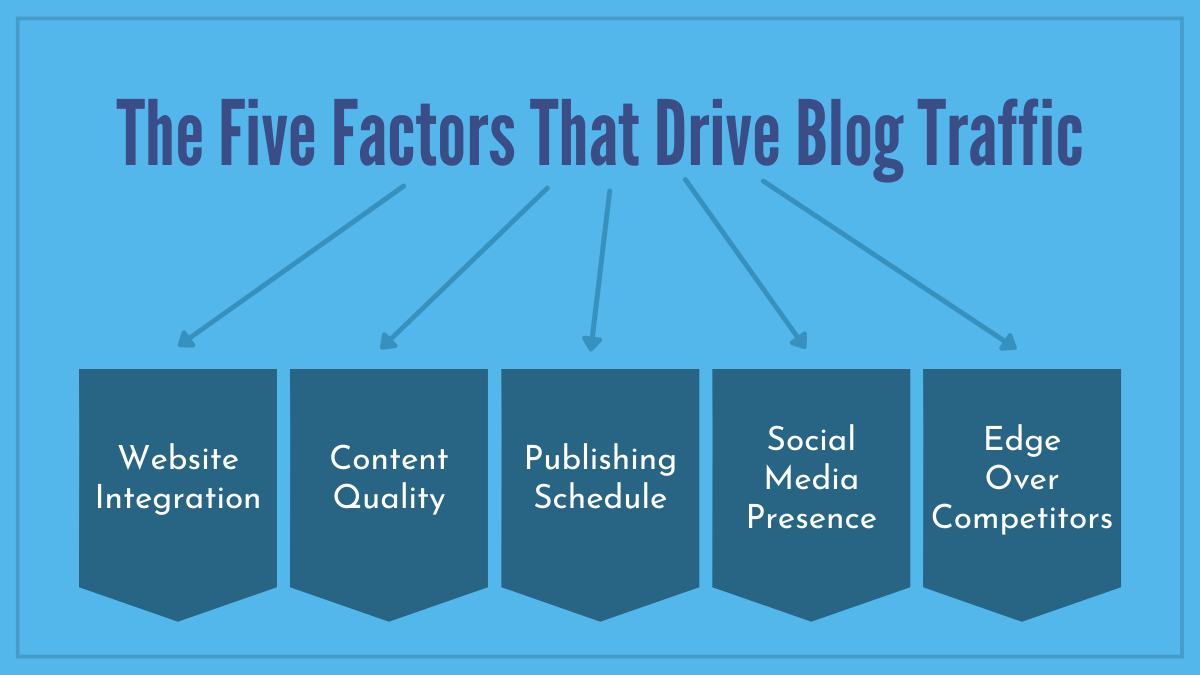
It takes more than just writing enough posts to increase blog traffic. Keep these five elements in mind if you want to operate a successful blog.
1. Website Integration
Your blog should be a part of your website if you currently have one. While it may be more convenient to publish your blog entries on a different platform (such as Medium) and connect it to your main site using a subdomain, doing so isn't ideal for SEO.
From the start, make your blog a component of your main website. This will make it easy to link your blog entries to the rest of your website's content—and vice versa—helping you rank higher in search engine results pages.
2. Content Quality
Your blog content should be informative. That is to say, your blog should educate, inform, or entertain, depending on your brand.
In the realm of blogging, the golden rule is to prioritize quality above quantity. It's preferable to publish a few well-written, informative blog pieces per month rather than often short, repetitive, or filler content. You won't be able to deliver value to your viewers if you can't write good content. No matter how many times you mention a given keyword, if you don't deliver value, your content is unlikely to score well in search results.
3. Publishing Schedule
It is critical to publish information on a frequent basis. But, on a weekly basis, how many blog entries does that equate to?
When they initially start their blog, many people submit one to three posts every week. Once a writer has established themselves and has the time and resources, they may publish more frequently.
However, you don't have to post every day; only one out of every five bloggers posts more than once a week.
More essential than how much you publish is how consistently you publish; if you post regularly, you'll gain more trust than if you post frequently but infrequently. Readers will develop the habit of reading your blog at the same time each week if you stick to a regular schedule—posting a new post every Tuesday is preferable than publishing a new post on a random day each week.
4. Social Media Presence
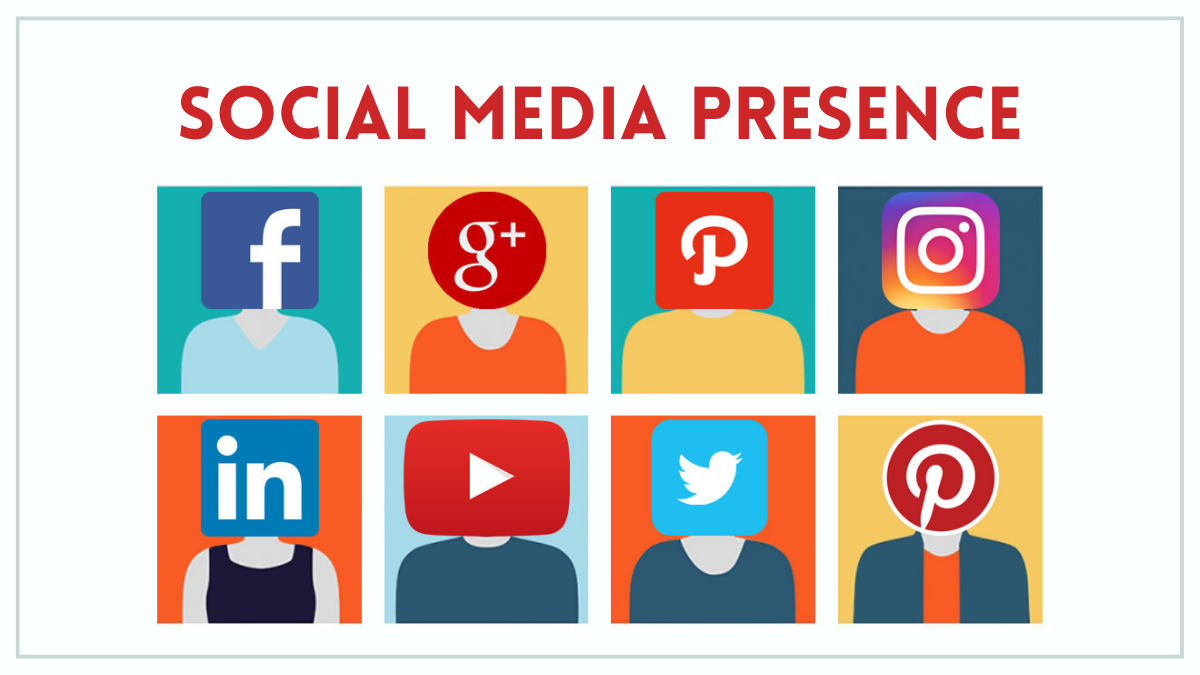
Organic search engine traffic is valuable, but it isn't the only source of traffic.
Use social media to market your blog, grow your readership, and increase traffic to your website. Use hashtags and participate in discussions to get your messages in front of the people who are most interested in your responses. You'll get more traffic and your readers will be more engaged as a result.
5. Edge Over Competitors
There will very certainly be a few other bloggers writing about the same themes as you, regardless of your specialization. They're your adversary.
If you want to build and keep a following, you must provide something that is superior to what your competitors can provide. This could imply more frequent publishing, better material, or more successful promotion.
If you want your blog to flourish, you'll need to find a way to stand apart from the crowd.
Also Read:
- What is a blog?
- How to write a blog for beginners [2022]
- Leading Blogging Platforms in 2022
- How to monetize a blog in 2022
3 Launch Strategies for More Blogging Success
Here are three techniques to help you find success sooner rather than later if you've just started a blog and/or are looking for ways to increase traffic:
Publish Your Posts Immediately
Before encouraging people to become readers, it's ideal to start publishing your pieces. A soft launch is a tactic in which your blog goes live without being advertised. It differs from a hard launch, in which a site and all of its content are made available to the public on a certain date and time.
Soft launches are a terrific option for bloggers who don't yet have a following. Search engines, such as Google, will have enough time to see and index your blog, allowing you to begin generating search engine traffic before you officially launch it.
Immediate publication of entries also aids in increasing the amount of content on your site. Visitors will notice that your blog contains a wealth of relevant information, which may assist convert a one-time visitor into a regular reader.
Wait to Promote Your Blog
Make no promises you can't keep right now. Readers value consistency, which is something that new blogs frequently lack.
When starting a new blog, you'll need to iron out several kinks like:
- Early posts are being revised.
- Experimenting with the blog layout and making modifications.
- Organizing your web pages and articles.
- Finding the perfect tone for your content can be difficult.
- Getting into the swing of things and figuring out a system that works for you.
While your blog doesn't have to be flawless right away, waiting before promoting it allows you to experiment and make the necessary changes to provide valuable information to your target audience. Once you've successfully promote your blog, you'll have a wealth of information in your content library for readers to enjoy, as well as a consistent posting schedule that will build anticipation each week.
Use Social Media and Email Marketing
You can start promoting your material once you've written 10 to 15 posts, established a routine that allows you to write on a regular basis, and decided on a layout that you like.
Starting to promote your content on social media is a great place to start. Consider promoting your content on major networks like Facebook, Instagram, LinkedIn, Pinterest, and even YouTube, depending on your niche:
- Make announcements and provide updates on your blog.
- Post fascinating tidbits or teasers with links to your blog content.
- Request that your fans like, comment, and share your posts.
- Participate in the discussion and answer the comments.
- Use your social media interactions to spark new blog posts—some people may ask questions, which you can respond to with new blog pieces!
As you engage directly with your target audience on a platform they are likely to use to connect with friends and family, social media allows you to personalize your brand. While social media allows for more casual connections, it is important to remain professional and on-brand.
Another fantastic technique to market your site is through email newsletters. Create an email list to reach out to people:
- Send out blog notices and updates.
- Make a list of all the useful blog posts you've written on a specific topic.
- Send teasers or excerpts of fresh blog posts, along with links to your website.
The purpose of blog promotion is to bring your material in front of your target audience. There's no better way to do this than to interact with them on a one-on-one basis. You may utilize social media and email newsletters to drastically increase the success of your blog.
Unleash Your Blog’s Potential
The ability to create high-quality content is only the first step toward running a blog. To make your blog a success, you'll need to do the following:
- When you officially start your blog, you should have 10 to 15 entries up.
- Continue to provide valuable material for your intended audience.
- Maintain a regular posting schedule.
- Use social media platforms and email newsletters to promote your blog.
- Follow SEO best practices when designing your website, and naturally incorporate keywords into your material.
Remember that patience is a virtue, no matter how difficult it is. To put it another way, wait a while before making any major changes to your blog's design or content.
Also Read: